Local communities thrive when residents take an active role in maintaining the safety, beauty, and functionality of their neighborhoods. From a deep pothole that damages vehicles to persistent late-night noise or a neglected property violating city codes, everyday issues can quickly erode quality of life. Knowing how to report local issues the right way empowers citizens to turn frustration into action and improve their surroundings effectively and responsibly. In today’s connected world, reporting potholes, noise complaints, and code violations is easier than ever—but doing it properly makes all the difference. A clear, well-documented report submitted to the correct department dramatically increases the chances of a fast and meaningful response. This guide explains exactly how to report local problems, who to contact, what information to provide, and how to follow up professionally.
A: Use 311 for non-emergency issues. If there’s immediate danger to life/safety, call emergency services.
A: Exact location, clear description, when it happens, photos if safe, and the impact (traffic hazard, accessibility, etc.).
A: Often yes, but leaving contact info can help inspectors clarify details and update you.
A: It may have been merged into an existing work order—add your details and keep both ticket numbers.
A: For hazards, follow up within a few days. For routine issues, 1–2 weeks is common—check local service timelines.
A: Reopen if possible, reference the ticket number, add new photos, and note “still present as of (date).”
A: Usually on public streets, but some are on private roads, parking lots, or are tied to utility work—routing varies.
A: Keep a consistent log (dates/times), describe the type of noise, and report during the window it occurs if enforcement needs to witness it.
A: Stick to facts, avoid accusations, don’t confront anyone, and use official channels with clear documentation.
A: If there’s a safety risk, repeated closures without resolution, or long delays—contact the department directly or your council district office with ticket history.
Why Reporting Local Issues Matters
When residents ignore local problems, small inconveniences often become larger public safety hazards. A pothole can cause tire blowouts or bicycle accidents. Chronic noise disturbances may impact mental health and neighborhood harmony. Code violations such as unsafe structures or illegal dumping can create environmental and safety risks.
Cities and counties rely on public reporting systems because municipal staff cannot monitor every street at all times. Local governments such as the New York City Department of Transportation, Los Angeles Bureau of Street Services, and Chicago Department of Buildings all depend heavily on resident-submitted service requests to prioritize repairs and inspections.
By reporting local issues properly, you contribute to:
Improved public safety
Stronger property values
More responsive local government
Greater neighborhood pride
Data-driven infrastructure planning
Civic engagement is not limited to voting or attending council meetings. Sometimes, it starts with reporting a pothole the right way.
Understanding the Types of Local Issues
Before submitting a complaint or service request, it’s important to understand what category your issue falls into. Different departments handle different concerns. Potholes typically fall under public works or transportation departments. Noise complaints may be handled by police departments, code enforcement offices, or environmental health divisions depending on the time and severity. Code violations—such as unsafe construction, unpermitted work, overgrown lots, or abandoned vehicles—usually fall under building and safety or municipal code enforcement divisions. Misrouting a report is one of the most common reasons for delays. Taking a moment to identify the correct department significantly increases efficiency.
Step One: Document the Problem Clearly
The most effective local issue reports are specific, factual, and supported by documentation. Avoid emotional language. Focus on measurable details.
If reporting a pothole, include the exact street address or nearest intersection, the size and depth if possible, and whether it poses immediate danger to vehicles or cyclists. For noise complaints, note the time, duration, and nature of the disturbance. For code violations, provide a clear description of what you observe without speculating about motives or intent.
Photographs are often extremely helpful. Many municipalities allow photo uploads directly through online service portals. A clear daytime image showing scale and surroundings provides context inspectors need.
When documenting an issue, include:
Precise location
Date and time observed
Clear description
Photos if available
Frequency (if recurring)
Well-documented reports reduce the need for follow-up clarification and speed up resolution.
Step Two: Use Official Reporting Channels
The fastest and most effective way to report local problems is through official municipal systems. Most cities now offer online portals, mobile apps, or centralized call centers.
In many U.S. cities, the 311 system is the primary non-emergency reporting tool. 311 services route requests to the appropriate department and provide tracking numbers for follow-up. For example, cities like Houston and Chicago operate comprehensive 311 service systems that allow residents to report potholes, noise complaints, graffiti, sanitation issues, and more.
If your city does not use 311, visit your municipality’s official website and search for “report a problem,” “service request,” or “code enforcement.”
Avoid posting complaints solely on social media. While some agencies monitor platforms like X or Facebook, these are not official reporting channels and may not generate work orders.
Always submit through an official portal first.
Reporting Potholes the Right Way
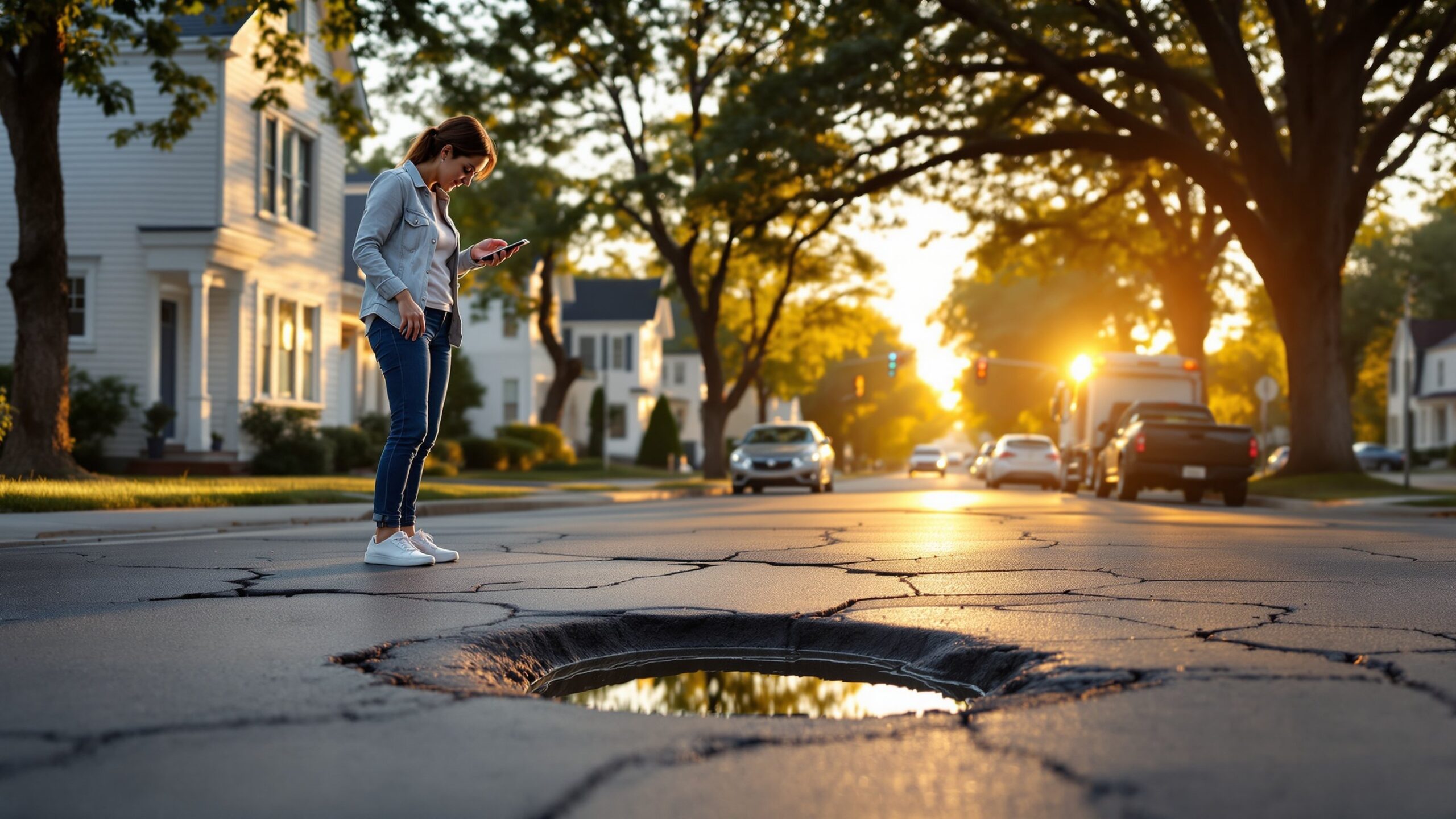
Potholes are among the most common municipal complaints. Road surfaces naturally degrade over time due to traffic, temperature fluctuations, and moisture. Municipal public works departments prioritize repairs based on safety risk and traffic volume. When reporting a pothole, provide the exact lane location if possible. Indicate whether it is near a school zone, intersection, or high-traffic corridor. Mention if vehicles are swerving to avoid it, as that increases urgency. Some cities provide interactive maps where residents can check whether the pothole has already been reported. Submitting duplicate reports is usually acceptable, but checking first can save time. In severe cases where a pothole creates immediate danger, call your city’s non-emergency number rather than waiting for online processing.
Filing Noise Complaints Effectively
Noise complaints can be more sensitive than infrastructure reports because they often involve neighbors or local businesses. Handling them professionally preserves relationships while protecting your right to peace and quiet.
First, determine whether the noise violates a specific ordinance. Many cities define quiet hours, commonly between 10:00 p.m. and 7:00 a.m. Check your local municipal code online.
If the disturbance is ongoing and severe—such as loud parties late at night—contact your local non-emergency police line. Avoid calling 911 unless there is an immediate threat to safety.
For recurring issues like construction noise outside permitted hours or commercial operations exceeding sound limits, submit a formal complaint through your city’s code enforcement or environmental health department.
Maintain a written log of repeated disturbances, including dates and times. Consistent documentation strengthens your case if the issue escalates.
Reporting Code Violations with Accuracy
Code violations can include unsafe building conditions, illegal dumping, unpermitted construction, abandoned vehicles, excessive trash accumulation, or hazardous structures. When reporting code violations, stick to observable facts. Instead of writing, “My neighbor is running an illegal business,” describe what you observe: “Commercial delivery trucks arrive daily between 6 a.m. and 9 a.m. at a residential property zoned R-1.” This factual approach prevents misinterpretation and protects you from potential disputes. Many cities allow anonymous reporting of code violations. However, including contact information may help inspectors request clarification if needed.
When to Call Police vs. Code Enforcement
Understanding the difference between criminal activity and code violations prevents misdirected complaints.
Criminal activity—such as vandalism in progress, reckless driving, or violent disturbances—should be reported to police immediately.
Quality-of-life violations—such as tall weeds, building disrepair, or improper signage—are usually handled by code enforcement officers rather than police.
If uncertain, 311 operators can route your request correctly.
Provide Contact Information (When Appropriate)
While many systems allow anonymous submissions, providing your name and contact details can improve response times. Agencies sometimes need clarification about location details or timing. Most municipalities keep complainant information confidential to protect residents from retaliation. Check your local public records laws for confirmation. Including contact information signals that you are a serious, engaged citizen rather than submitting a vague or speculative complaint.
Track Your Service Request
After submitting a report, most systems generate a confirmation number. Save it. Many municipal websites allow residents to track the status of service requests online.
If the issue remains unresolved beyond the expected timeframe, use the tracking number when following up. Reference the original submission date and any case ID numbers.
Professional follow-up is more effective than submitting multiple duplicate complaints without context.
Be Patient—but Persistent
Municipal departments often manage thousands of service requests weekly. Weather events, staffing levels, and budget cycles can affect response times. If your issue involves safety hazards, emphasize that in your initial report. For lower-priority concerns, allow reasonable time for inspection and processing. Persistence is appropriate when accompanied by professionalism. Calm, clear communication yields better results than confrontational language.
Escalating Unresolved Issues
If a problem remains unresolved after reasonable time and follow-up, escalation may be appropriate.
Options may include:
Contacting your city council representative
Attending a public meeting
Submitting a written complaint to a department supervisor
Requesting status updates through official channels
Local elected officials often assist constituents with navigating municipal services. Providing documentation strengthens your request for assistance.
The Role of City Councils and Local Leadership
City council members are responsible for overseeing municipal departments and responding to community concerns. If infrastructure problems persist across multiple blocks or neighborhoods, broader policy discussions may be necessary. Council offices frequently have constituent service staff who help residents resolve issues. Engaging with local leadership respectfully enhances accountability and transparency.
Building Stronger Communities Through Civic Reporting
Reporting local issues is not about complaining—it is about stewardship. Well-maintained streets, safe housing, and reasonable noise levels contribute to thriving neighborhoods. When residents participate actively in identifying problems, cities gain valuable data for infrastructure planning and resource allocation. Patterns of repeated pothole complaints may signal the need for resurfacing rather than patching. Clusters of code violations may highlight under-resourced areas needing inspection support. Civic reporting strengthens democratic systems by creating feedback loops between government and residents.
Avoiding Common Mistakes
Many service requests fail because they lack sufficient detail, are sent to the wrong department, or rely solely on social media.
Avoid emotional accusations, speculation, or confrontational language. Stick to observable facts and measurable impacts.
Do not assume officials are ignoring you intentionally. Delays are often procedural rather than personal.
Finally, avoid retaliatory or harassment-driven reporting. Municipal systems are designed to solve real community problems, not settle personal disputes.
Technology Is Making Reporting Easier
Modern civic technology platforms have transformed how residents interact with local government. Mobile apps now allow GPS-tagged submissions, photo uploads, and instant case tracking. These tools increase transparency and response accountability. In some cities, service request data is publicly viewable, allowing residents to see repair timelines and departmental workloads. As digital reporting systems improve, citizen participation becomes more efficient and impactful.
Turning Frustration into Action
Every community experiences local issues. Roads deteriorate. Noise happens. Buildings age. The difference between declining neighborhoods and thriving ones often lies in civic engagement. By reporting potholes accurately, filing noise complaints professionally, and documenting code violations responsibly, you contribute to a healthier, safer, and more responsive community.
The process is straightforward:
Observe carefully.
Document clearly.
Submit through official channels.
Track professionally.
Follow up respectfully.
When residents and local governments collaborate effectively, small actions create meaningful change.
Civic Responsibility in Action
Knowing how to report local issues the right way is a practical civic skill. It protects your property, enhances public safety, and strengthens democratic accountability. Whether you live in a major metropolitan area or a small town, your participation matters. Responsible reporting ensures that infrastructure remains safe, neighborhoods stay livable, and municipal systems function as intended. Communities improve when citizens engage—not just at the ballot box, but on the streets where daily life unfolds. When you see a pothole, hear chronic late-night noise, or notice unsafe property conditions, remember: taking the right steps today builds a better neighborhood tomorrow.